What are a Directors’ Duties to Creditors in the UK?




When your company is solvent, your duty is to shareholders. When it is insolvent or approaching insolvency, that duty shifts to creditors. We stress this: the shift is not optional, it is not gradual, and the liquidator will assess every decision you made after the tipping point against this standard.
We explain this duty to directors every week because it is the legal foundation of almost every wrongful trading claim, misfeasance action, and disqualification case we see.
The Supreme Court confirmed in BTI 2014 LLC v Sequana SA [2022] that the duty to creditors arises when the company is insolvent or bordering on insolvency. From that point, you must prioritise minimising losses to creditors over everything else, including your own salary, shareholder dividends, and the hope that next month will be better.
Quick Answer: When Do Directors Owe Duties to Creditors?
Section 172 of the Companies Act 2006 requires you to promote the success of the company for the benefit of its members (shareholders). But when the company is insolvent or approaching insolvency, this duty is modified: you must have regard to the interests of creditors.
The closer the company is to insolvency, the more weight creditors’ interests carry. At the point of insolvency, they become paramount and override shareholders’ interests entirely.
The practical trigger is the moment you know, or should know, that the company cannot pay its debts. Either because it fails the cash-flow test (cannot pay debts as they fall due) or the balance-sheet test (liabilities exceed assets) under section 123 of the Insolvency Act 1986.
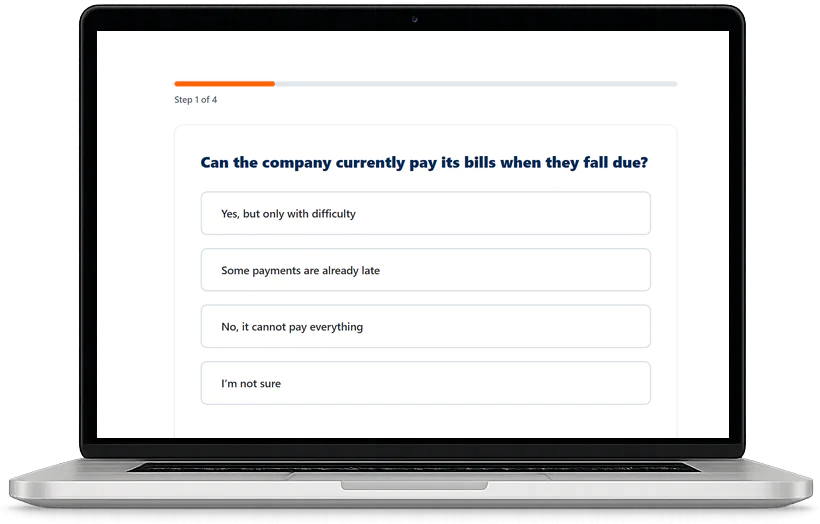
How Serious Is Your Company’s Position?
Answer four short questions to see how urgent the situation may be and which options could fit your company’s circumstances.
Check my company’s positionSee your result online and receive a copy by email. We only call if you ask.
What the Director Duty to Creditors Means in Practice
The duty is not abstract. It translates into specific decisions you must make and specific decisions you must stop making:
You must stop:
- Paying dividends to shareholders
- Increasing your own remuneration or bonuses
- Repaying your overdrawn director’s loan account
- Making preferential payments to connected parties (family, associated companies)
- Incurring new debts the company cannot service
- Trading if there is no reasonable prospect of avoiding insolvent liquidation
You must start:
- Acting to minimise the total loss to creditors
- Seeking professional insolvency advice
- Considering whether the company should stop trading
- Preserving the company’s assets for the benefit of creditors
- Keeping detailed records of every decision and the reasoning behind it
We tell directors: the creditor duty is not about being nice to creditors. It is about every financial decision you make after the tipping point being assessed through the lens of “did this protect creditors or did it make their position worse?”
The liquidator applies this lens retrospectively, with the benefit of hindsight, to every significant payment, every new order, and every week of continued trading.
The Sequana Decision: What It Changed for Director Duties to Creditors
The Supreme Court’s decision in BTI 2014 LLC v Sequana SA [2022] UKSC 25 clarified three things that had been debated for years:
- The creditor duty exists as a modification of section 172, not as a separate duty. It is part of the Companies Act framework, not a free-standing common law obligation.
- The duty applies on a sliding scale. The closer the company is to insolvency, the more weight creditors’ interests carry. It is not an on/off switch at the point of insolvency.
- The duty is triggered when the directors know or ought to know that the company is or is likely to become insolvent. “Likely” means probable, not merely possible. But directors cannot close their eyes to obvious warning signs.
We stress the sliding scale because it means the duty does not suddenly appear when the company is technically insolvent. If the company is in the “twilight zone” (financially stressed, struggling to pay debts on time, relying on cash-flow tricks to stay afloat) the duty to creditors is already growing in weight.
A director who ignores creditor interests during this period and continues to prioritise shareholders is building the case against themselves.
How the Liquidator Assesses Director Duties to Creditors
The conduct investigation examines your decisions from the moment insolvency was probable. The liquidator looks for:
- Dividends paid after insolvency was probable. Any distribution to shareholders during this period is evidence you prioritised shareholders over creditors.
- Selective payments. Paying connected parties (yourself, family, associated companies) ahead of other creditors is a preference and a breach of the creditor duty.
- New debts incurred. Every new order you placed, every new credit facility you drew down, every new obligation you committed to after the tipping point is scrutinised. Did the company need this debt? Could it service it? Did it benefit creditors or make their position worse?
- Continued trading without professional advice. Section 214 requires you to take every step a reasonably diligent person would take. Seeking insolvency advice is the strongest evidence of diligence. Not seeking it is evidence of the opposite.
- Asset transfers. Transferring assets to connected parties, below market value, is a transaction at undervalue and a breach of the creditor duty.
We are honest: the liquidator has the benefit of hindsight. They know exactly when the company became insolvent because they have the full financial records. You were making decisions in real time under pressure.
But the objective test asks: would a reasonably diligent person in your position have recognised insolvency sooner? If the answer is yes, the gap between when you should have known and when you acted is the period the liquidator focuses on.
Consequences of Breaching Director Duties to Creditors
- Wrongful trading (section 214): A personal contribution order for the increase in creditor losses during the period you should have stopped.
- Misfeasance (section 212): Personal liability for losses caused by breaching your section 172 duty as modified for creditors.
- Director disqualification: 2 to 15 years, with the length reflecting the seriousness of the breach.
- Transaction reversal: Dividends, connected-party payments, and asset transfers can be reversed by the liquidator.
How Directors Fulfil Their Duty to Creditors
- Recognise the tipping point. Use the insolvency tests to assess whether the company is insolvent or approaching insolvency.
- Seek professional advice immediately. The date you sought advice is the strongest evidence of compliance with the creditor duty.
- Stop paying dividends. No distributions to shareholders once insolvency is probable.
- Do not make selective payments. Pay in the ordinary course of business only. No preferences to connected parties.
- Document every decision. Board minutes recording what you decided, what information you had, and what advice you relied on. These records are your defence.
- Act on advice. If the IP advises you to stop trading, stop. If they advise a CVL, initiate it. Acting on professional advice is the section 214(3) defence in action.
Company Debt’s licensed insolvency practitioners can assess whether the creditor duty has been triggered for your company and what steps to take. A free, confidential consultation will clarify your position.
Check How Serious the Position May Be
Answer four short questions to see how urgent the situation may be and which broad options could fit.
Check my company’s positionEstimates are fineWe only call if you ask us to
FAQs on Director Duties to Creditors
When do I start owing duties to creditors instead of shareholders?
When the company is insolvent or bordering on insolvency. It is a sliding scale: the closer to insolvency, the more weight creditors’ interests carry. At the point of insolvency, creditors’ interests become paramount. The trigger is when you know or ought to know that the company cannot pay its debts.
Can I pay dividends if the company might be insolvent?
No. If insolvency is probable, dividends to shareholders breach the creditor duty. The liquidator can recover the dividends as a misfeasance claim. If you are unsure whether the company is solvent, get a formal solvency assessment before making any distribution.
What is the Sequana case and why does it matter?
BTI 2014 LLC v Sequana SA [2022] is the Supreme Court decision that confirmed the creditor duty exists as a modification of section 172 of the Companies Act. It established that the duty operates on a sliding scale, applies when insolvency is probable (not merely possible), and arises from the Companies Act framework rather than common law.
How do I prove I fulfilled my duty to creditors?
Seek professional advice early and act on it. Keep board minutes documenting every decision and the reasoning behind it. Stop paying dividends and making selective payments once insolvency is probable. The date you sought advice, the records you kept, and the decisions you made form the evidence the liquidator assesses.