


Am I Solvent? Solvency Tests Explained for UK Businesses
Read More




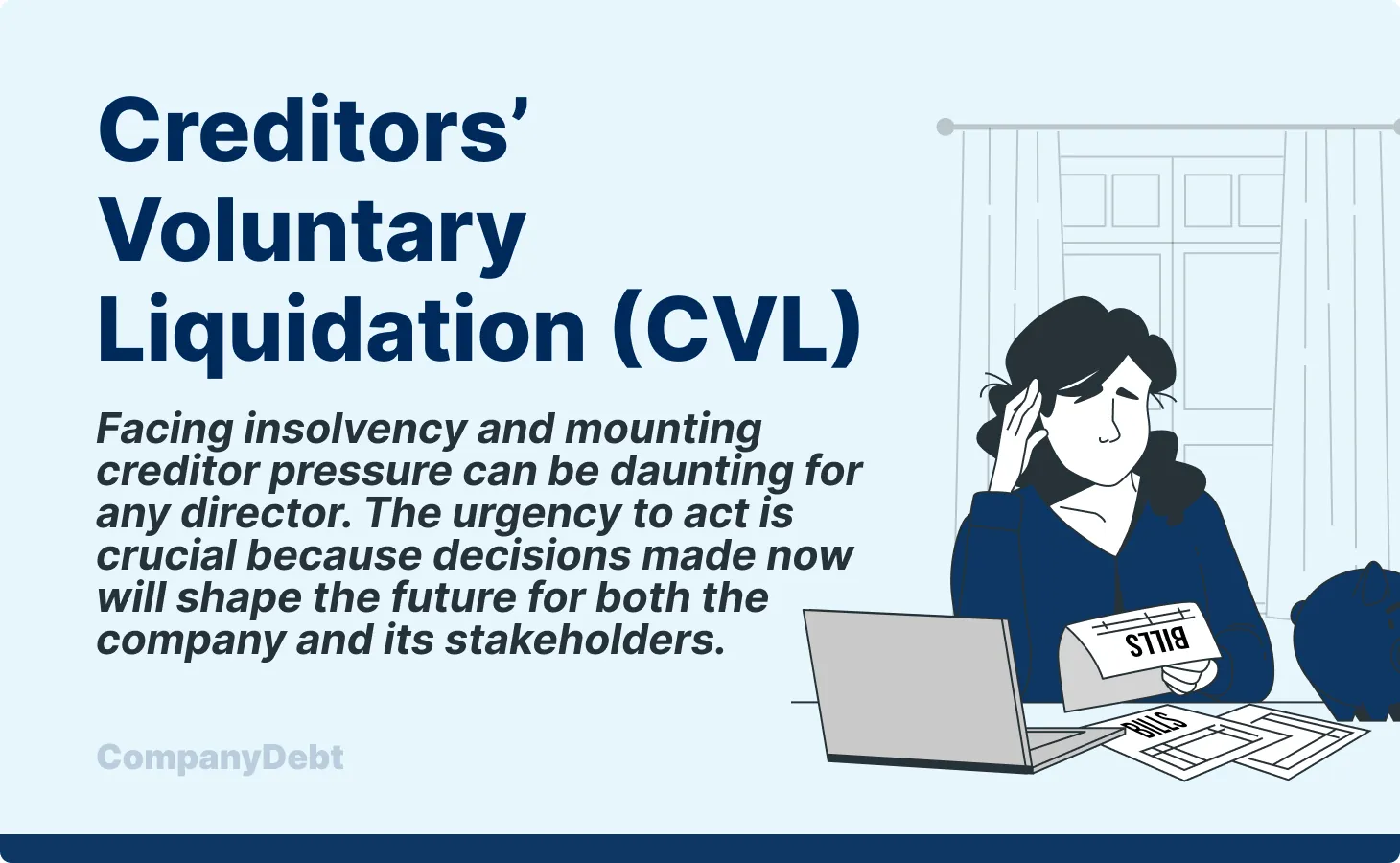
Facing insolvency and mounting creditor pressure can be daunting for any director. The urgency to act is crucial because decisions made now will shape the future for both the company and its stakeholders.
This guide will help you understand Creditors’ Voluntary Liquidations (CVLs), a vital option when a company can no longer meet its financial obligations.
It will explain why a CVL might be necessary, how the process unfolds in the UK, and what responsibilities and implications it holds for directors.
With clear insights into each step, you’ll be better equipped to navigate this challenging period.
A Creditors’ Voluntary Liquidation (CVL) is a formal process initiated by a company’s directors and shareholders when the company is unable to meet its financial obligations. This typically occurs when the company cannot pay its debts as they fall due or when its liabilities exceed its assets. The decision to enter into a CVL is made voluntarily by the company, rather than being forced by creditors or a court order.
Once the decision for a CVL is made, an insolvency practitioner is appointed to manage the company’s affairs. Their primary role is to liquidate the company’s assets and distribute the proceeds to creditors in accordance with legal priorities. This process ensures that creditors receive as much of what they are owed as possible, given the company’s financial situation.
The CVL process allows directors to take proactive steps in managing their company’s insolvency, potentially preserving their professional reputation by demonstrating responsible conduct. It also provides a structured and legally compliant method for winding up the company’s operations.
[1]Trusted Source – GOV.UK – Directors’ Responsibilities in Liquidation, Creditors’ Voluntary Liquidation
Recognising the signs of insolvency early is crucial for directors to fulfil their legal obligations and act in the best interests of creditors. Here are common indicators that your company may need a Creditors’ Voluntary Liquidation (CVL):
Directors have a legal duty to act in the creditors’ best interests once insolvency is apparent. Ignoring these signs can lead to personal liabilities, including accusations of wrongful trading.

Navigating a Creditors’ Voluntary Liquidation (CVL) involves several structured steps designed to ensure an orderly wind-up of an insolvent company. Here is a concise breakdown of the typical CVL process:
Each step in this process is designed to ensure transparency and fairness. It provides a structured approach to handling insolvency while safeguarding creditor interests.
When a company becomes insolvent, directors face significant responsibilities and potential liabilities. If directors continue business operations when they know there is no reasonable prospect of avoiding insolvency, it is crucial to avoid wrongful trading. Under Section 214 of the Insolvency Act 1986, directors can be held personally liable if they fail to take every step to minimise losses to creditors.
Cooperation with the appointed insolvency practitioner is essential. Directors must provide accurate records and a statement of affairs, detailing the company’s financial position. This transparency helps ensure a smooth liquidation process and reduces the risk of personal liability.
Timely action is vital. Delaying decisions can exacerbate financial difficulties and increase personal exposure. Maintaining detailed records not only aids in demonstrating diligence but also supports compliance with statutory duties. By acting promptly and responsibly, directors can mitigate risks and fulfil their legal obligations effectively.
[2]Trusted Source – GOV.UK – Directors’ Responsibilities in Liquidation
Engaging in a Creditors’ Voluntary Liquidation (CVL) involves several financial considerations. The primary cost is the insolvency practitioner’s fees, which are necessary for managing the liquidation process. These fees are typically prioritised in the distribution of the company’s assets. Additionally, costs may arise from asset realisation, where company assets are sold to generate funds for creditors. The distribution of these funds follows a statutory order, starting with fixed charge holders and ending with unsecured creditors and shareholders if any surplus remains.
Potential cost factors include:
Understanding these financial implications is crucial for directors and finance managers to manage the CVL process effectively.
Read our full article on liquidation costs.
When a company faces insolvency, selecting the appropriate course of action is crucial for its stakeholders. Here is a comparison of Creditors’ Voluntary Liquidation (CVL) with other insolvency options like administration and compulsory liquidation:
Creditors’ Voluntary Liquidation (CVL):
Administration:
Compulsory Liquidation:
Each option has distinct implications for control, cost, and timeline, making it essential for directors to assess their company’s circumstances before proceeding carefully.
Selecting the right insolvency practitioner (IP) is crucial for navigating a Creditors’ Voluntary Liquidation (CVL) effectively. Here are some tips to guide you:
At Company Debt, we understand the challenges and pressures directors face when considering liquidation. Our licensed insolvency practitioners offer practical, expert advice tailored to your situation, helping you navigate each step of the CVL process efficiently.
Contact Us for Expert Insolvency Support
For immediate help, get in touch through:
For more information, you can also visit resources from The Insolvency Service or GOV.UK.
Director information hub: Creditors’ voluntary liquidation (CVL) – GOV.UK
Liquidate your limited company: Arrange liquidation with your creditors – GOV.UK
Will I be held personally liable for company debts in a CVL?
Directors are generally not personally liable for company debts in a CVL due to limited liability. However, personal liability can arise if there is evidence of wrongful trading, fraudulent trading, or personal guarantees. Directors should act in the best interests of creditors to avoid personal exposure.
Can I start a new company after a CVL?
Yes, you can start a new company after a CVL. However, you cannot use the same or a similar name as the liquidated company for five years without court permission. This restriction aims to prevent confusion and protect creditors and customers from potential misconduct.
What happens to employee wages and redundancy?
If the company cannot meet its obligations, employees may claim unpaid wages, holiday pay, and redundancy through the Redundancy Payments Service. This government service ensures employees receive statutory entitlements despite the company’s financial situation.
Does a CVL affect my credit rating?
A CVL does not directly impact your personal credit rating. However, it may affect your ability to obtain credit for future business ventures, as lenders often consider past insolvencies when assessing risk. Maintaining transparent communication with creditors can help mitigate potential negative perceptions.
Can I buy back assets from the liquidator?
Yes, directors or related parties can buy back assets from the liquidator, provided the sale is conducted at market value and approved by creditors. This process must be transparent to ensure fairness and prevent any conflicts of interest during the liquidation.
What happens to the company’s debts in a CVL?
In a CVL, the company’s assets are sold off to repay creditors. Debts are settled according to a statutory order of priority, but unsecured creditors may not receive full repayment if there are insufficient assets.
How long does the liquidation stay on public record?
A CVL remains on public record indefinitely through Companies House records. The company’s status will show as “liquidation” until it is dissolved and struck off the register. This record provides transparency and accountability for stakeholders reviewing a company’s history.
What if my company has no assets to cover costs?
If your company has no assets, the costs of liquidation may still be met through director contributions or creditor agreements. An insolvency practitioner can advise on options to manage these costs effectively while ensuring compliance with legal obligations.
How does a CVL affect ongoing contracts?
In a CVL, ongoing contracts are usually terminated unless the liquidator decides otherwise. The liquidator assesses each contract’s value and potential benefit to creditors before making decisions. This ensures that any remaining value is maximised for creditor distribution.
The primary sources for this article are listed below, including the relevant laws and Acts which provide their legal basis.
You can learn more about our standards for producing accurate, unbiased content in our editorial policy here.