

Understanding Creditors in UK Insolvency: Types, Rights & Director Duties
Read More




If you are a UK limited company director or small business owner grappling with the term “ceased trading,” you are not alone. This phrase can cover a range of scenarios, from temporarily pausing business activities to fully winding down operations due to insolvency or a planned closure. Understanding this term is crucial, as it affects your legal and financial responsibilities.
The following sections will explore the legal definitions, implications for stakeholders, and the next steps you should consider to navigate this challenging phase effectively.
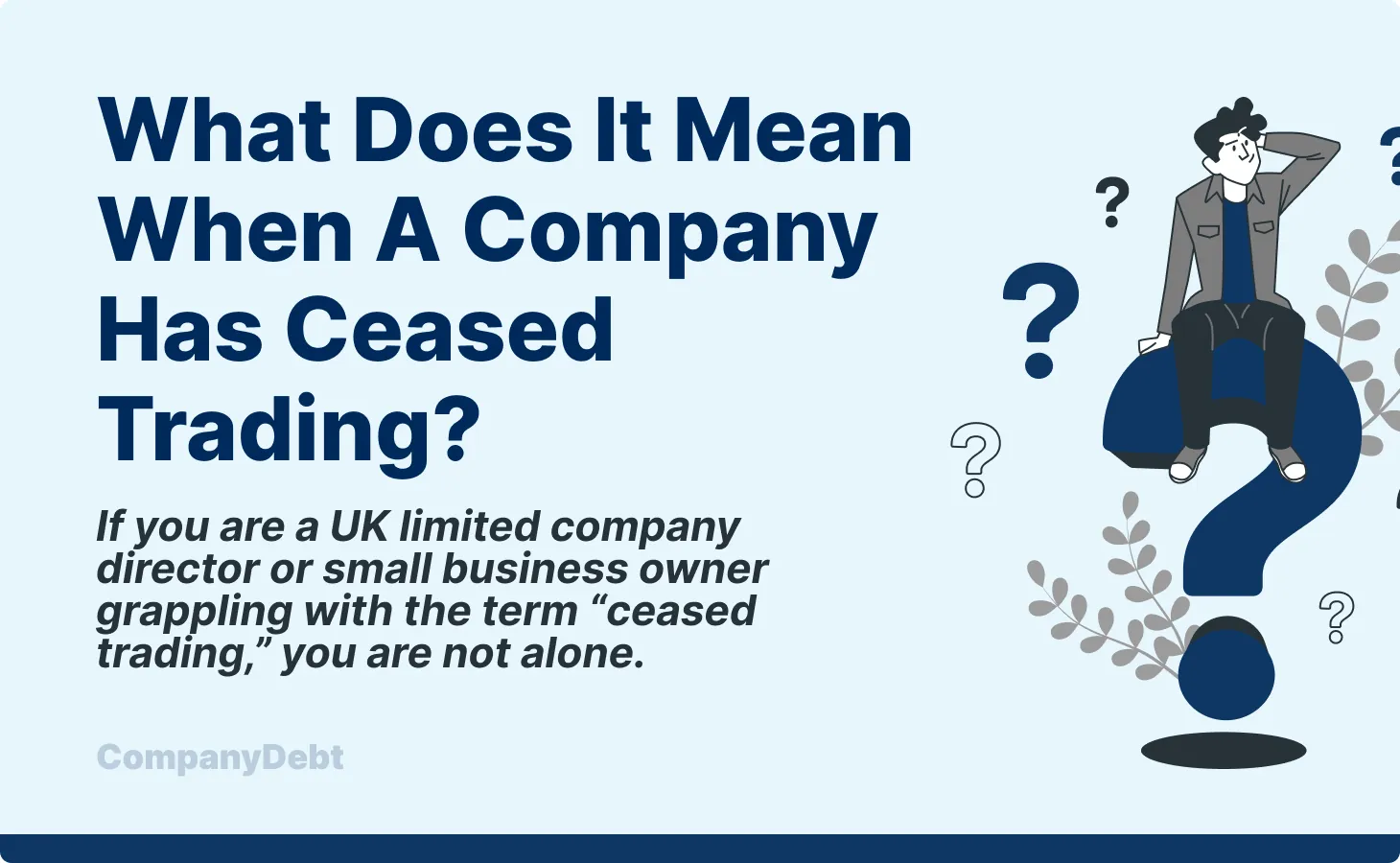
In the UK, “ceased trading” refers to a company halting its business activities. This can be temporary or permanent, depending on the circumstances. A company might stop trading temporarily due to seasonal breaks or strategic pauses. However, a permanent cessation often results from financial distress or a planned winding down.
It is important to note that ceasing trading does not mean the company is dissolved or free from legal obligations. Directors must still manage outstanding liabilities and comply with statutory duties. Understanding this distinction helps directors navigate the next steps effectively and meet all necessary legal and financial responsibilities.
When a company ceases trading, it affects directors, employees, and creditors differently. Understanding these implications is crucial for managing the transition effectively.
When a company ceases trading, directors face a complex landscape of legal obligations, especially if the company is insolvent. Once insolvency becomes a concern, directors must act in the best interests of creditors to avoid personal liability.
Key legal risks include wrongful trading and misfeasance. Wrongful trading occurs if directors continue business operations while knowing insolvency is unavoidable, which can lead to personal financial liability under the Insolvency Act 1986. Misfeasance involves directors misusing company funds or assets, which can also result in personal liability.
Engaging a licensed insolvency practitioner early can be invaluable. Common triggers for seeking advice include persistent cashflow problems, mounting debts, or threats from creditors. Professional guidance ensures compliance with legal requirements and helps protect directors from personal liability.
Following correct procedures is crucial. Directors must continue to fulfil statutory obligations, such as filing accounts with Companies House and settling tax liabilities with HMRC. Failure to do so can lead to fines or director disqualification.
By understanding these responsibilities and seeking timely advice, directors can effectively manage the cessation of trading and minimise potential legal repercussions.
When a UK company ceases trading, choosing the correct formal closure route is essential. The main options include voluntary strike off, Members’ Voluntary Liquidation (MVL), Creditors’ Voluntary Liquidation (CVL), and compulsory liquidation. Each is suited to different circumstances, depending on the company’s solvency status.
Choosing the correct path depends on your company’s financial health and your objectives as a director. Professional guidance from a licensed insolvency practitioner can be crucial for navigating these processes effectively and ensuring legal compliance.
Once a company has stopped trading, directors must act promptly and methodically to manage the transition. Here is a practical checklist to guide you:
If your company is about to cease trading, our licensed insolvency practitioners and business rescue specialists can explain your responsibilities, outline the options available, and guide you on the best way forward. Call us free on 0800 074 6757 for confidential advice.
Does ceasing trading mean my company is immediately dissolved?
No, ceasing trading does not automatically dissolve your company. This means that the company has stopped its business activities. The company remains legally active until you complete a formal closure process, such as dissolution or liquidation.
Can I still pay existing creditors after ceasing trade?
Yes, you can and should pay existing creditors after ceasing trade. It is important to settle outstanding debts to avoid legal complications and maintain good relationships with creditors.
What if I want to restart trading in the future?
If you wish to restart trading, ensure your company complies with all legal obligations, such as filing annual returns and accounts. As long as the company has not been dissolved, you can resume business without needing to re-register it.
How does ceasing trading affect staff redundancy?
Ceasing trading typically triggers redundancy for employees. You must follow proper procedures, including providing statutory notice periods and redundancy pay where applicable. Employees can claim outstanding payments from the Redundancy Payments Service if the company is insolvent.
Do I need to notify HMRC if I have stopped trading?
Yes, you must inform HMRC when your company stops trading. This includes submitting final tax returns and settling outstanding tax liabilities to avoid penalties.
What if the company cannot pay its debts in full?
If your company cannot pay its debts in full, it may be insolvent. In this situation, seeking advice from a licensed insolvency practitioner is crucial. They can help you explore options such as Creditors’ Voluntary Liquidation (CVL) or compulsory liquidation.
Am I personally liable for debts if I am a director?
In most cases, limited liability makes directors not personally liable for company debts. However, personal liability can arise if you have provided personal guarantees or if wrongful trading is proven during insolvency proceedings.