How to Manage Business Debt




If your company owes more than it can comfortably pay, debt management is not about hoping it resolves itself. It is about understanding which debts are dangerous, which creditors will escalate first, and what tools are available to restructure what you owe before a creditor decides for you.
We work with directors managing business debt every day. The ones who come through it best are not the ones with the smallest debts. They are the ones who faced the numbers honestly, prioritised the creditors who could hurt them most, and took action while they still had options.
The ones who come through it worst are the ones who treated every creditor equally, paid whoever shouted loudest, and left HMRC until last. We cannot tell you how many times we have seen that sequence end with a winding-up petition.
Quick Answer: How to Manage Business Debt
List every debt your company owes. Separate them into three categories: (1) debts that can trigger enforcement or insolvency proceedings (HMRC, creditors over £750 who could petition), (2) debts that are operationally critical (rent, key suppliers, payroll), and (3) debts that can wait (unsecured creditors without enforcement powers).
Deal with category 1 first. Contact HMRC for a Time to Pay arrangement. Negotiate directly with critical suppliers. Then assess whether the business is viable with restructured debt or whether formal insolvency is the appropriate route.
Could Your Company Be Insolvent?
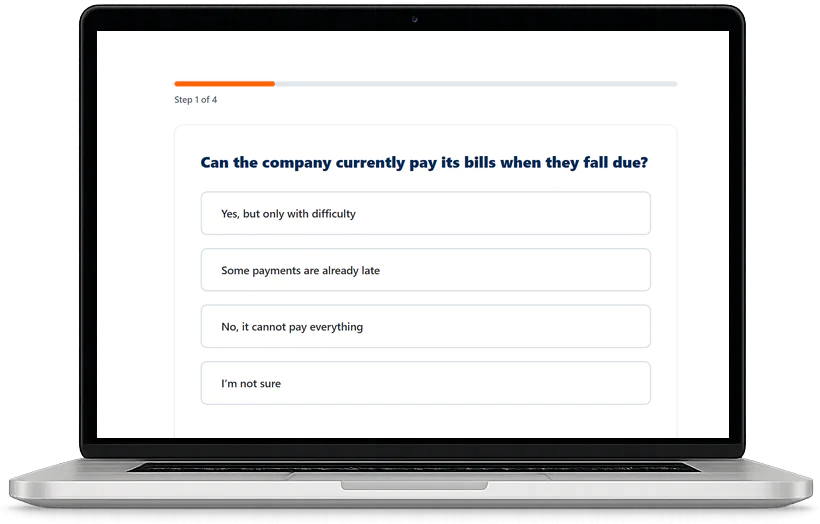
Answer four short questions to see which warning signs apply, how serious the position may be and how soon you may need to act.
See which options may fit your company’s circumstances.
Check my company’s positionSee your result online and receive a copy by email. We only call if you ask.
Step 1: Know Exactly What Debt the Business Owes
We find that most directors in debt trouble do not have an accurate total. They know the big debts but not the accumulation of small ones. Pull together a complete list: every creditor, every amount, every due date, and whether the debt is secured, preferential, or unsecured. Your accountant can help if you do not have the figures to hand.
We stress this because the total often surprises directors. They know they owe HMRC £30,000 and a supplier £15,000, but when they add the other 20 creditors, the total is £90,000, not the £45,000 they had in their head. The accurate number changes the strategy.
Step 2: Prioritise Business Debt by Danger, Not by Who Calls Most
Not all creditors are equally dangerous. We advise prioritising by enforcement power:
- HMRC: can serve statutory demands, petition to wind up, send enforcement agents and, where unpaid National Insurance results from a director’s fraud or neglect, issue personal liability notices to directors. Always deal with HMRC first.
- Secured creditors (banks): can appoint receivers, enforce charges over property, and call in personal guarantees. If you have a bank loan with a debenture, the bank is your second priority.
- Landlord: can forfeit the lease and lock you out of your premises. If your business depends on the premises, this is operationally critical.
- Trade creditors over £750: can serve a statutory demand and petition for compulsory liquidation. The £750 threshold is low. Almost any supplier can petition.
- Employees: unpaid wages create immediate operational problems. If the company enters insolvency, wages owed for the four months before it, up to £800 per employee, are preferential debts.
We tell directors: the supplier who phones you five times a day may be annoying, but if they are owed £2,000 and have no security, they are less dangerous than HMRC who has not called yet but is compiling an enforcement referral. Prioritise by power, not by volume.
Step 3: Contact Your Most Dangerous Business Debt Holders First
HMRC: Call 0300 200 3835 (Business Payment Support Service) and negotiate a Time to Pay arrangement. This is the single most effective debt management tool available to UK businesses. We cover it in detail in our TTP guide.
Bank/secured lender: Contact your relationship manager. Explain the position. Banks have restructuring teams that can adjust repayment terms, extend facilities, or agree interest-only periods. We find that banks engaged early are cooperative. Banks engaged after a missed payment are defensive.
Landlord: Negotiate a rent reduction, a payment holiday, or a longer lease in exchange for a period of reduced rent. Landlords prefer a paying tenant to an empty premises and a forfeiture that costs them money.
Key suppliers: Offer a payment plan. Explain the situation honestly. Suppliers who understand the position and see a realistic plan are more likely to continue supplying than suppliers who are left in the dark.
Step 4: Assess Whether the Business Is Debt-Viable
Debt management only works if the business can sustain itself going forward. If you restructure the debt but the business still loses money every month, you are delaying insolvency, not preventing it.
The test is simple: can the company generate enough cash to cover its operating costs, meet current obligations, AND service the restructured debt? If yes, manage the debt. If no, the question becomes whether to close or save the company.
We are honest about this because we see directors who spend 12 months managing debt that should have been resolved through a formal insolvency process. Every month of debt management on an unviable business increases the total debt, narrows the options, and increases the director’s personal wrongful trading exposure.
Formal Business Debt Management Options
If informal negotiation is not enough, formal options exist:
- Company Voluntary Arrangement (CVA): A binding deal with creditors to repay a proportion of the debt over 3-5 years. Requires approval by 75% by value of the creditors who vote, and fails if more than half by value of unconnected creditors vote against. You keep trading. See our CVA guide.
- Administration: Court protection while the business is restructured or sold. Stops most creditor enforcement straight away. A creditor then needs the administrator’s consent or the court’s permission to act.
- Other alternatives to liquidation: Refinancing, invoice finance, asset-based lending. Injecting new capital to bridge a cash-flow gap.
We advise directors to explore informal options first (Steps 1 to 3) and move to formal options only if informal negotiation fails or creditor pressure is too intense to manage informally.
What Directors Should Do Right Now to Manage Debt
- List every debt. Total it. Face the number.
- Prioritise by danger. HMRC first, secured creditors second, everyone else after.
- Call HMRC today if you owe them. 0300 200 3835.
- Assess viability. Can the business fund restructured debt AND current obligations? If not, the problem is bigger than debt management.
- If you are not sure, speak to a licensed insolvency practitioner. Company Debt’s regulated insolvency practitioners can assess your debt position and recommend the right approach. A free, confidential consultation will tell you whether informal management is realistic or whether you need a formal route.
Not Sure Where Your Company Stands?
Use the two-minute test to check the warning signs and see how soon you may need to act.
Check my company’s positionEstimates are fineWe only call if you ask us to
FAQs on Managing Business Debt
Should I pay HMRC or suppliers first?
HMRC first. They have the strongest enforcement powers: statutory demands, winding-up petitions, enforcement agents and, where a director’s fraud or neglect caused unpaid National Insurance, personal liability notices. A supplier can sue you. HMRC can close your company. Prioritise by enforcement power, not by who calls most.
Can I negotiate with creditors myself?
Yes. Informal negotiation costs nothing and should always be tried first. Call each creditor, explain the position honestly, and propose a realistic payment plan. The key is acting early. Creditors who are engaged before enforcement starts are significantly more willing to negotiate.
When does debt management become insolvency?
When the company cannot pay its debts as they fall due (cash-flow test) or its liabilities exceed its assets (balance-sheet test). If you are choosing which creditors to pay each month, you have almost certainly crossed that line.
At that point, debt management becomes insolvency management, and your duties as a director change. You must give real weight to creditors’ interests, and they come first once insolvent liquidation or administration cannot be avoided. See our guide on how to check if your company is insolvent.